
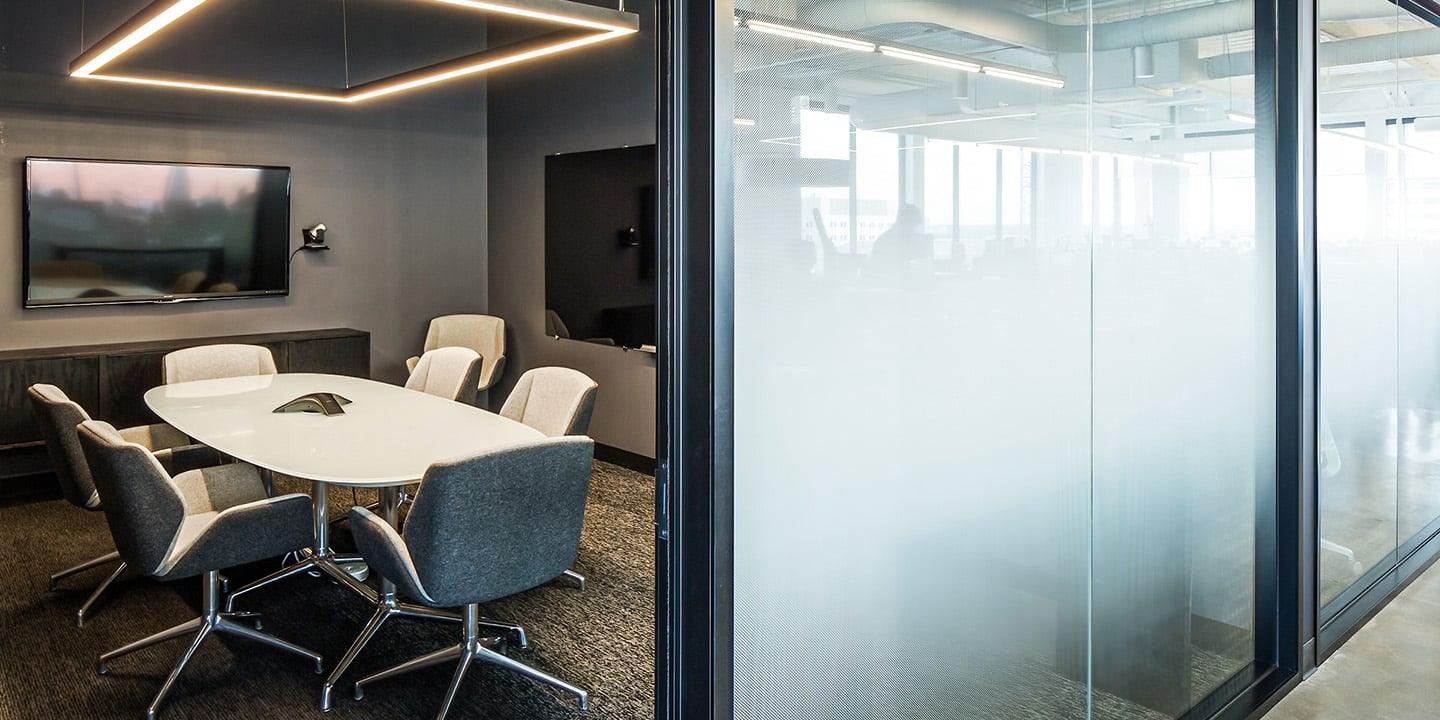
How to Design Custom Gradient Window Film for Architectural Glass
Architectural glass plays an important role in creating open, connected spaces, but it can also introduce challenges with privacy and visual separation. Custom gradient window films offer a way to manage visibility without sacrificing the overall openness of the design.
With the Gradient Visualizer from Design Studio by Decorative Films, architects and designers can explore gradient configurations, compare finishes, and establish dimensions for their projects before requesting a quote.
Watch the Gradient Visualizer Tutorial
Our video tutorial walks through the design process, from selecting a gradient type to submitting a project request. Use the steps below as a reference while developing your own architectural glass film design.
Video not displaying? Watch the tutorial on Vimeo
How to Use the Gradient Visualizer
Step 1: Select Your Gradient Type
Begin by choosing the gradient configuration that best suits your architectural application.
- Feather Gradient: Creates a single transition between a clear and more opaque area of glass. This is useful when privacy is needed along one portion of a glass elevation.
- Dual Feather Gradient: Introduces a central area of greater opacity that transitions toward clear glass above and below. This allows privacy to be concentrated within a specific section of the glass.
Both options provide flexibility when balancing privacy, transparency, and the surrounding design.
Step 2: Choose Your Film Finish
Next, select the appearance of your gradient. The visualizer includes White, Frost, Black, and TruEtch options, with additional opacity or finish selections available depending on the material.
The finish influences how the gradient interacts visually with the surrounding glass, making this an important consideration for conference rooms, office partitions, and other architectural interiors.
Step 3: Define Your Gradient Dimensions
For a feather gradient, enter the measurements of three separate areas:
- Clear: The portion that maintains clear visibility.
- Fade: The distance over which the film transitions between clear and opaque.
- Solid: The portion that provides the greatest visual coverage.
Example Gradient Configuration
12" Clear + 36" Fade + 36" Solid = 84" Total Height
As you enter your measurements, the Gradient Visualizer automatically calculates the overall height and updates the illustration.
Step 4: Evaluate Privacy at Human Scale
The visualizer displays a six-foot figure beside the glass, providing a useful reference for understanding how your gradient relates to the people occupying the space.
Architects can use this reference to consider where privacy begins, how high the solid portion extends, and where clear sightlines are maintained.
Adjusting the fade distance also changes the visual transition. A longer fade creates a more gradual effect, while a shorter fade concentrates the transition into a smaller area.
Step 5: Compare Different Configurations
Continue refining the dimensions until the gradient aligns with your intended design.
You can also switch between available film finishes while retaining the same measurements, making it easier to compare different aesthetic approaches without rebuilding the configuration.
Step 6: Request a Quote
When the gradient reflects your project intent, select Request Quote.
The visualizer transfers your material selections and dimensions into a specification summary. After providing your contact and project information, submit the request for review by our Design Studio team.
Our specialists can discuss project-specific requirements, coordinate physical samples, and help move the design toward production.
Architectural Applications for Custom Gradient Films
Gradient window films can be incorporated into a variety of commercial and architectural environments, including conference rooms, glass-walled offices, hospitality interiors, healthcare facilities, and other spaces where privacy and openness must coexist.
They can also be applied to existing glass, providing another option when updating interior environments without replacing the glazing.
For architects and interior designers, the ability to adjust the fade, finish, and placement helps integrate privacy treatments into the overall design rather than treating them as an afterthought.
Custom Colors and Physical Sample Review
Design Studio can manufacture gradients in custom colors beyond the standard options shown in the visualizer.
Because color appearance can vary between screens, lighting environments, and physical materials, an on-screen preview should not be considered final color approval.
For custom-color projects, our team can develop a physical sample that allows you to review the actual material before committing to full production.
We also recommend evaluating available film finishes with physical samples under the lighting conditions of the intended installation.
If you are still considering finish options, our Custom Film Selection Charts provide a useful starting point.
Frequently Asked Questions
What is the difference between a feather and dual feather gradient?
A feather gradient creates one transition between clear and opaque coverage. A dual feather gradient positions a more opaque section between two transitions toward clear glass.
Can I request a custom gradient color?
Yes. Design Studio can work with custom colors beyond those displayed in the visualizer. Physical sample review is recommended to evaluate the desired color on the actual material.
Does the Gradient Visualizer create a final production specification?
The visualizer helps establish design intent and creates a specification summary for your quote request. Final material selections and project requirements are reviewed with the Design Studio team.
Bring Your Gradient Design to Life
Whether you're designing a conference room privacy treatment or developing custom graphics for an architectural glass installation, Design Studio by Decorative Films can help translate your concept into a manufacturable film solution.
Request a Custom Gradient Design